Platinum’s 2025 Rally in Context



After nearly a decade stuck between $600 and $1,250/oz, platinum has surged nearly 50% in 2025, joining gold (its best year since 1979) and silver (near record highs).
The rally reflects global unease with fiat currencies amid stubbornly high inflation, falling interest rates, and widening fiscal deficits. Most economies face above-target inflation while central banks slash rates, eroding real yields. Meanwhile, governments from the U.S. to China, the U.K., and Japan are running large, persistent deficits. In this environment, investors are turning to assets central banks cannot print—gold, silver, and now platinum.
Why Platinum Lags Gold and Silver
Despite its 2025 rally, platinum has long underperformed gold and silver due to its heavy reliance on the auto sector, particularly diesel engines. Automotive demand peaked in 2006–07 and has since declined as diesel lost market share. By contrast, gold’s value is largely investment-driven, while silver has found new industrial demand in solar panels and batteries.
Still, with gold at records and silver near all-time highs, investors are eyeing platinum as a relative bargain. Demand may also stabilize from diesel trucks and grow with hydrogen fuel cells.
Supply Side Advantage
Global platinum output is just 5.5 million ounces in 2025—tiny compared with gold (20x larger) and silver—and is highly concentrated in South Africa, with smaller contributions from Russia and Zimbabwe. This scarcity and geographic concentration add to platinum’s appeal as a diversification play.
Bottom Line: Platinum has underperformed its peers for decades, but today’s mix of inflation fears, loose monetary policy, and tight supply is putting it back on investors’ radar.
U.S. stocks finished higher Friday after a surprisingly weak September jobs report increased expe...
Alphabet-backed Isomorphic Labs, the AI-powered drug-discovery company spun out of Google DeepMin...
In this episode, we break down the latest technical picture across Gold (XAUUSD), Bitcoin (BTCUSD...
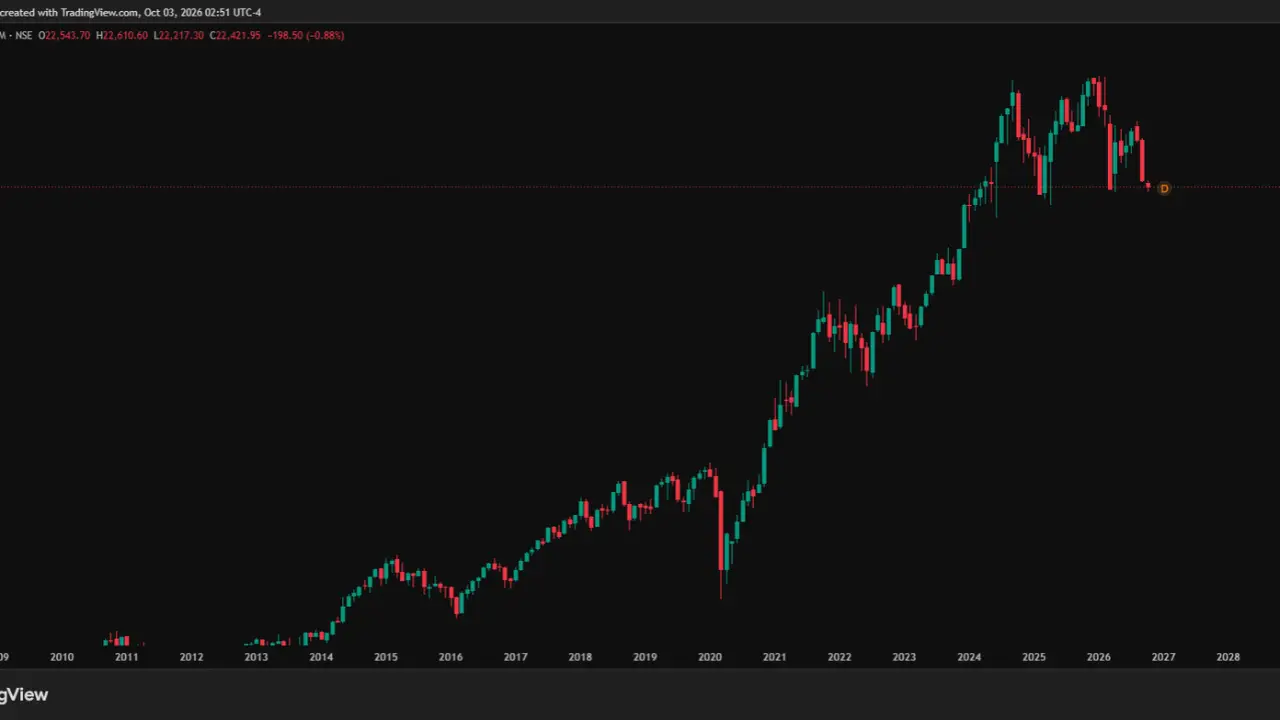
The Nifty 50 is currently around 22,780, down roughly 13% from its January all-time high of 26,37...

Bitcoin recovered above $81,000–$82,000 as investors responded to U.S. President Donald Trump's comments ab...

U.S. stocks ended mixed on Thursday as fresh concerns surrounding OpenAI’s revenue performance rattled investor...

OpenAI expects its annualized revenue to reach or exceed $70 billion by the end of 2026, according to a Bloomberg rep...