UAE Carriers Resume Limited Flights Amid Regional Conflict
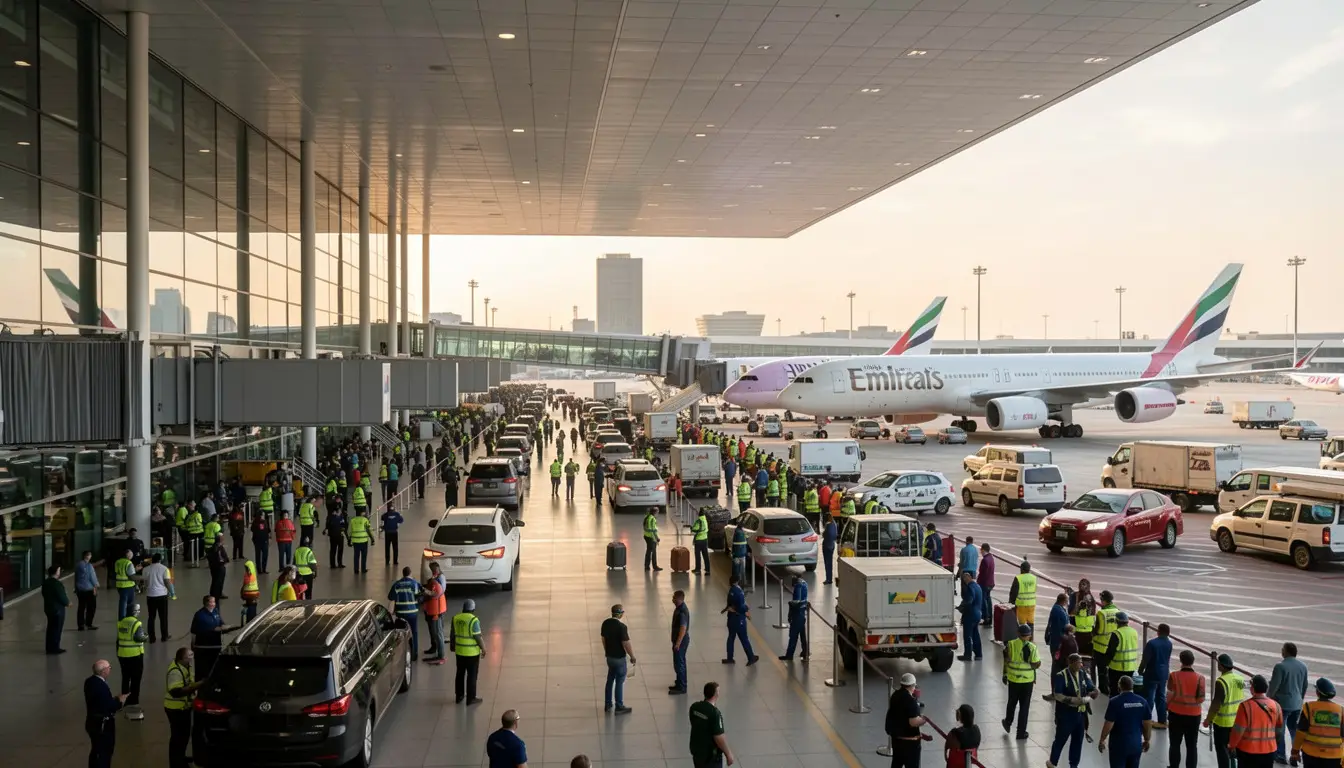


Emirates and Etihad Airways have resumed limited flight schedules from their United Arab Emirates hubs as of Friday, though continued missile threats are adding pressure on airlines trying to accommodate travelers.
With much of Middle Eastern airspace still closed due to missile and drone concerns since the start of the U.S.-Israel conflict involving Iran, authorities have been organizing charter flights and securing seats on restricted commercial services to evacuate tens of thousands of people.
A government-chartered Air France flight carrying French nationals from the UAE had to return on Thursday after missile fire in the area, according to French Transport Minister Philippe Tabarot. “This situation reflects the instability in the region and the complexity of repatriation operations,” he said.
Etihad confirmed that a limited flight schedule will run through March 19, connecting Abu Dhabi with 25 destinations including London, Paris, Frankfurt, Delhi, New York, and Toronto.
Dubai’s airport traffic, normally among the world’s busiest, nearly doubled on Thursday compared with Wednesday, though it remained only around 25% of typical volume, according to flight-tracking site Flightradar24.
Emirates is operating a reduced schedule to 82 destinations, including London, Sydney, Singapore, and New York, until further notice. Passengers transiting through Dubai are only being accepted if their connecting flights are operating. Limited Middle Eastern hub operations have particularly affected travelers flying from Europe to Asia-Pacific regions.
Combined, Emirates, Qatar Airways, and Etihad typically carry roughly one-third of passengers traveling from Europe to Asia and more than half of those flying from Europe to Australia, New Zealand, and nearby Pacific islands, according to Cirium. Qatar’s Doha hub remains closed but is arranging some relief flights from Oman and Saudi Arabia.
From February 28 to March 5, over 44,000 flights were scheduled in and out of the Middle East, with more than 25,000 canceled, data from Cirium showed.
Rising oil prices have driven jet fuel costs to record levels, with Singapore jet fuel reaching $225 per barrel before easing slightly to around $195. Higher fuel costs have impacted airlines’ stock performance: Qantas Airways fell more than 3%, Air New Zealand declined nearly 7%, Cathay Pacific dropped over 2%, and Singapore Airlines fell over 1%. Major Chinese carriers including Air China, China Eastern Airlines, and China Southern Airlines declined between 2% and 4%.
Passengers attempting to leave the region have faced high costs and logistical challenges. Ed Short, arriving in London from Oman, described paying £1,500 ($2,005) to reach Muscat to board a flight after initially spending around £20,000 on Emirates tickets.
With the conflict showing little sign of abating, disruptions to aviation and air cargo are expected to continue. Saudi budget carrier flynas will operate a limited number of flights between Saudi Arabia and Dubai starting Friday.
Emirates and Etihad Airways.
Much of the airspace remains closed due to missile and drone threats, leading to flight cancellations and charters.
Jet fuel prices surged, reaching $225 per barrel in Singapore, contributing to declines in airline stock prices.
Many faced high costs and chaotic arrangements to leave the region, including chartered flights and expensive commercial tickets.
Qatar Airways and flynas, along with some operations from Oman and Saudi Arabia, are assisting with limited flights.
Alphabet-backed Isomorphic Labs, the AI-powered drug-discovery company spun out of Google DeepMin...
Stock futures moved slightly higher early Tuesday after the Nasdaq Composite reached a new record...
U.S. stocks ended mixed on Thursday as fresh concerns surrounding OpenAI’s revenue performa...
The S&P 500 finished marginally lower on Monday as investors prepared for a busy week of corp...

Technology stock weakness and surging energy prices put investors on alert, raising fears of renewed inflation, highe...

Willow chip cuts quantum computing errors by 40 times, advancing research that could eventually reshape the cybersecu...

Markets lean toward a pause as the Federal Reserve weighs persistent inflation against economic resilience and the ne...