Trump Vows to Continue Tariff Strategy Despite Supreme Court Setback
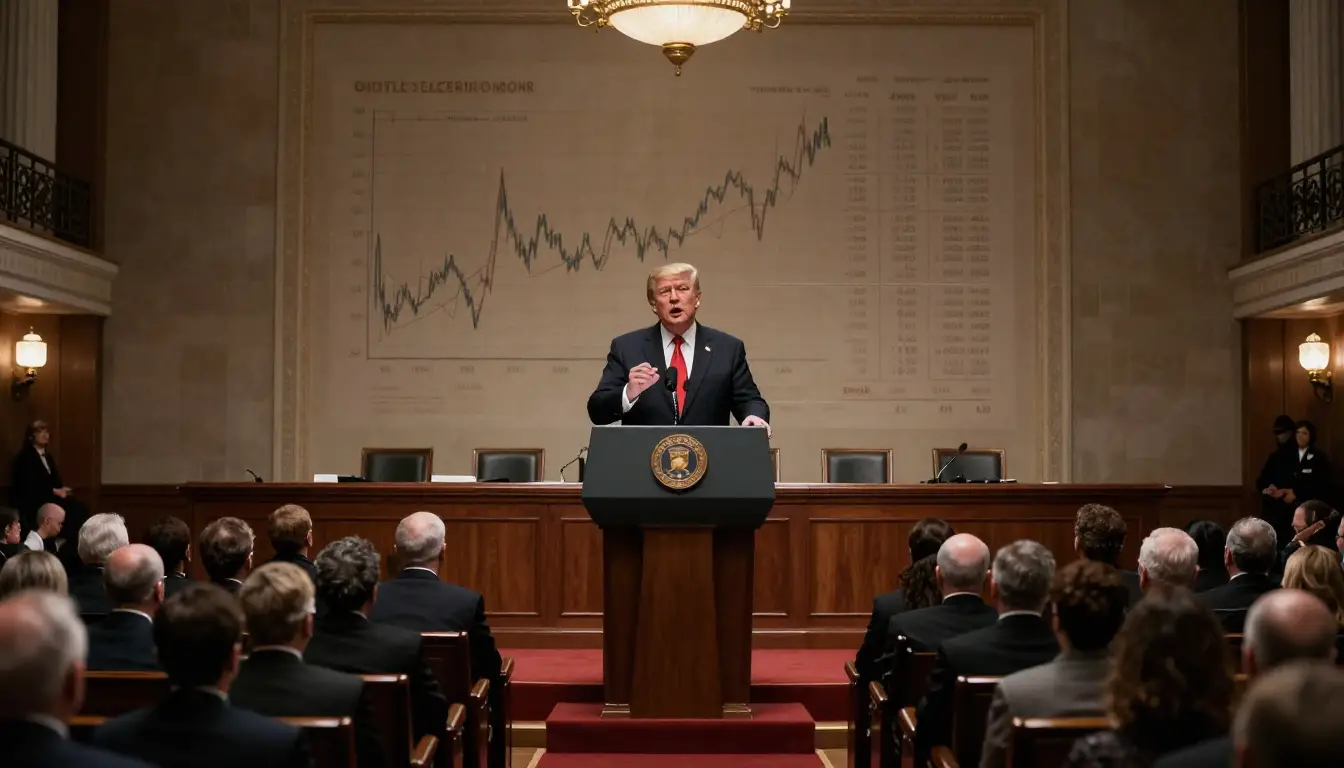


U.S. President Donald Trump said Tuesday evening that he intends to move forward with his tariff plans despite the Supreme Court overturning his previous tariff framework.
During his State of the Union address, Trump described the ruling as disappointing but emphasized that tariffs had played a key role in strengthening the U.S. economy over the past year. He added that his administration would maintain tariffs using alternative legal mechanisms, although he did not provide specific details.
Trump also stated that Congressional approval would not be required to continue implementing tariffs. He noted that existing trade agreements with major global partners remain intact and suggested that any renegotiated terms would be less favorable for those countries.
The president reiterated his long-standing position that tariff revenue could eventually reduce or replace income taxes, claiming such policies would generate significant government revenue.
Last week, the Supreme Court ruled that Trump had exceeded his authority when imposing tariffs under the International Emergency Economic Powers Act. In response, Trump introduced new tariffs under Section 232 of the Trade Expansion Act, initially proposing 15% duties. However, the tariffs took effect at a lower rate of 10%, reflecting limitations on imposing higher duties without Congressional approval.
Record-Length State of the Union Address
Trump delivered the longest State of the Union speech in U.S. history, lasting one hour and 48 minutes. His address covered key issues including immigration, trade, economic performance, and cost-of-living measures. He also criticized political opponents and the previous administration.
Trump highlighted stock market gains, attributing the growth to his tariff policies. He also discussed artificial intelligence and technology infrastructure, stating that major tech companies should build independent power facilities for their data centers to prevent higher electricity costs for consumers.
He called it unfortunate but vowed to continue tariffs.
He claimed Congressional approval would not be needed.
Section 232 of the Trade Expansion Act.
One hour and 48 minutes, the longest ever.
Tariffs could eventually replace income taxes.
U.S. stocks finished higher Friday after a surprisingly weak September jobs report increased expe...
In this episode, we break down the latest technical picture across Gold (XAUUSD), Bitcoin (BTCUSD...
The Nifty 50 is currently around 22,780, down roughly 13% from its January all-time high of 26,37...
Stock futures moved slightly higher early Tuesday after the Nasdaq Composite reached a new record...

Alphabet-backed Isomorphic Labs, the AI-powered drug-discovery company spun out of Google DeepMind, is reportedly in ...
U.S. stocks declined Wednesday as rising Treasury yields weighed on investor sentiment, with bond yields reaching the...
SpaceX is reportedly in talks to raise $40 billion in debt financing to purchase Nvidia AI chips, highlighting the en...