Market Wrap – Ceasefire Sparks Broad Risk Repricing


Global markets rallied sharply following the announcement of a two-week ceasefire agreement between the US and Iran, easing immediate fears of a prolonged conflict and restoring partial confidence in energy flows through the Strait of Hormuz. The shift in sentiment triggered a strong cross-asset reaction, with equities moving higher, bonds rallying, and commodities repricing aggressively as geopolitical risk premium was rapidly unwound.
Equity markets led the move, with US futures gaining more than 2.5% and European stocks recording their strongest rally in a year, while Asia-Pacific indices climbed close to 5% as investors rotated back into risk. At the same time, oil markets experienced a significant correction, with Brent crude falling as much as 16% and WTI dropping nearly 19%, marking one of the steepest declines in recent years as supply disruption fears eased. The sharp decline in energy prices fed directly into fixed income markets, where global bonds rallied and yields moved lower, with UK 10-year rates falling by around 22 basis points as inflation expectations were repriced. In currency markets, the dollar weakened to a multi-week low, while gold moved higher, supported by declining yields and renewed expectations of monetary easing.
Despite the strong market reaction, the geopolitical backdrop remains fragile. Reports of ongoing military activity across the region, including drone interceptions and damage to key infrastructure in Kuwait, highlight that tensions have not fully dissipated. Israel continues its operations in Lebanon, while Hezbollah has warned of potential further escalation. At the same time, regional and global powers have intensified diplomatic efforts, with Gulf states emphasizing the need to secure uninterrupted navigation through the Strait of Hormuz, a critical artery for global energy supply. As a result, while markets are clearly pricing in near-term de-escalation, a lasting resolution remains uncertain.
From a macro perspective, the sharp drop in energy prices has significantly altered the near-term outlook. Lower oil prices are expected to ease global inflation pressures, prompting a rapid repricing of interest rate expectations, particularly in the United States. Market participants are now assigning roughly a 60% probability of a Federal Reserve rate cut before year-end, a notable shift from earlier in the week when easing expectations had largely been priced out. This adjustment has also reduced downside risks to global growth that had emerged during the peak of the conflict.
Elsewhere, developments in global monetary policy remain in focus. In Japan, stronger-than-expected real wage growth has reinforced the case for further policy normalization by the Bank of Japan, while in New Zealand, the central bank has maintained a cautious stance but signaled readiness to act if inflation pressures re-emerge, with markets anticipating potential rate hikes later this year.
Overall, the current market move reflects a powerful relief rally driven by the rapid unwinding of geopolitical and inflation risks. However, the sustainability of this rebound will depend heavily on whether the ceasefire evolves into a more durable agreement and whether energy flows through the Strait of Hormuz remain stable. Until greater clarity emerges, markets are likely to remain highly sensitive to geopolitical headlines, leaving volatility elevated in the near term.
By Amir Amidian
Senior Market Analyst | Zylostar
Markets reacted to the US–Iran ceasefire as a major de-escalation signal, reducing the risk of prolonged conflict and disruption to global energy supply, which had been the primary driver of recent volatility.
Oil had priced in a significant geopolitical risk premium due to fears around the Strait of Hormuz. The ceasefire and reopening of shipping routes triggered a rapid unwind of those fears, leading to one of the steepest declines in years.
Lower energy prices directly ease inflation pressures, particularly through fuel and transportation costs, which has led markets to reassess the outlook for global inflation in the near term.
With inflation risks easing, traders have increased bets on monetary easing, particularly in the US, where markets now see a higher probability of rate cuts before year-end.
The rally is primarily driven by short-term relief. Its sustainability depends on whether the ceasefire holds and evolves into a longer-term agreement, as well as the stability of energy flows from the region.
Bitcoin's latest rally has attracted a major wave of institutional money. U.S. spot Bitcoin E...
Alibaba is accelerating its global AI expansion, announcing plans to build new cloud regions acro...
U.S. stocks finished higher Friday after a surprisingly weak September jobs report increased expe...
In this episode, we break down the latest technical picture across Gold (XAUUSD), Bitcoin (BTCUSD...
In this episode, we break down the latest technical picture across Gold (XAUUSD), Bitcoin (BTCUSD), EURUSD, NASDAQ (U...
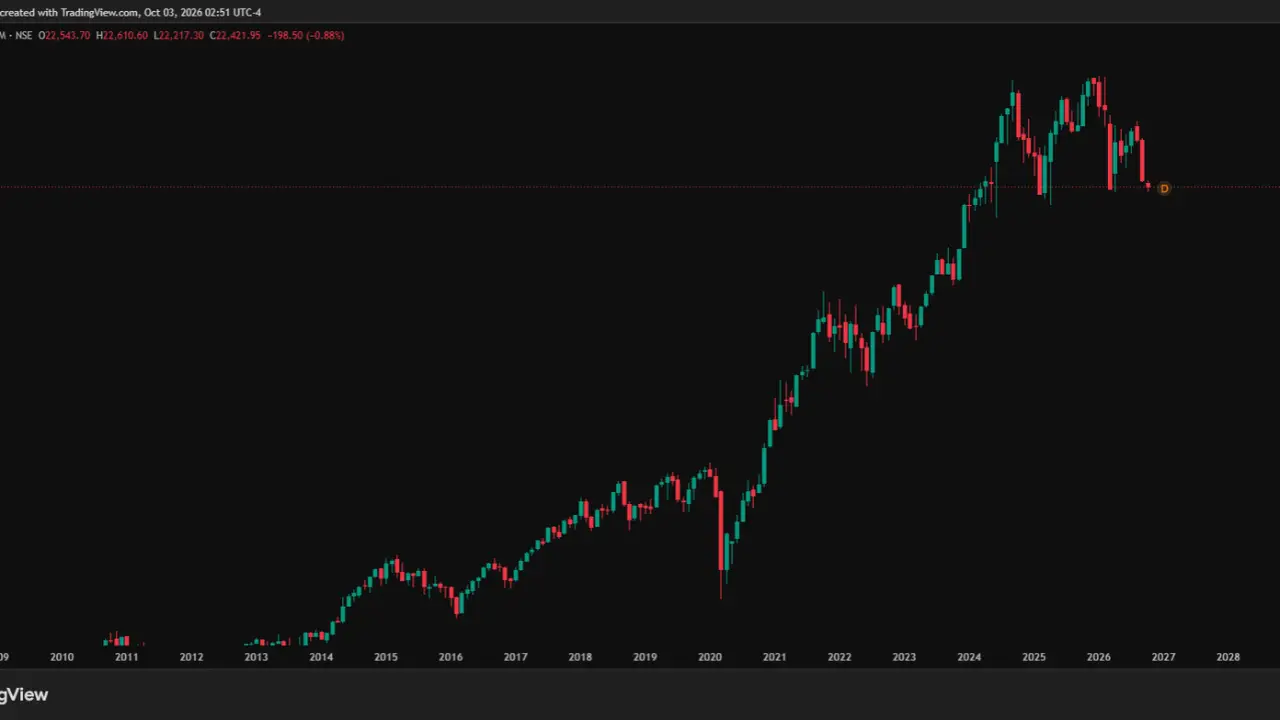
The Nifty 50 is currently around 22,780, down roughly 13% from its January all-time high of 26,373. After the stro...
U.S. stocks finished higher Friday after a surprisingly weak September jobs report increased expectations that the Fe...