Forex Impact of US Supreme Court Ruling on Tariffs
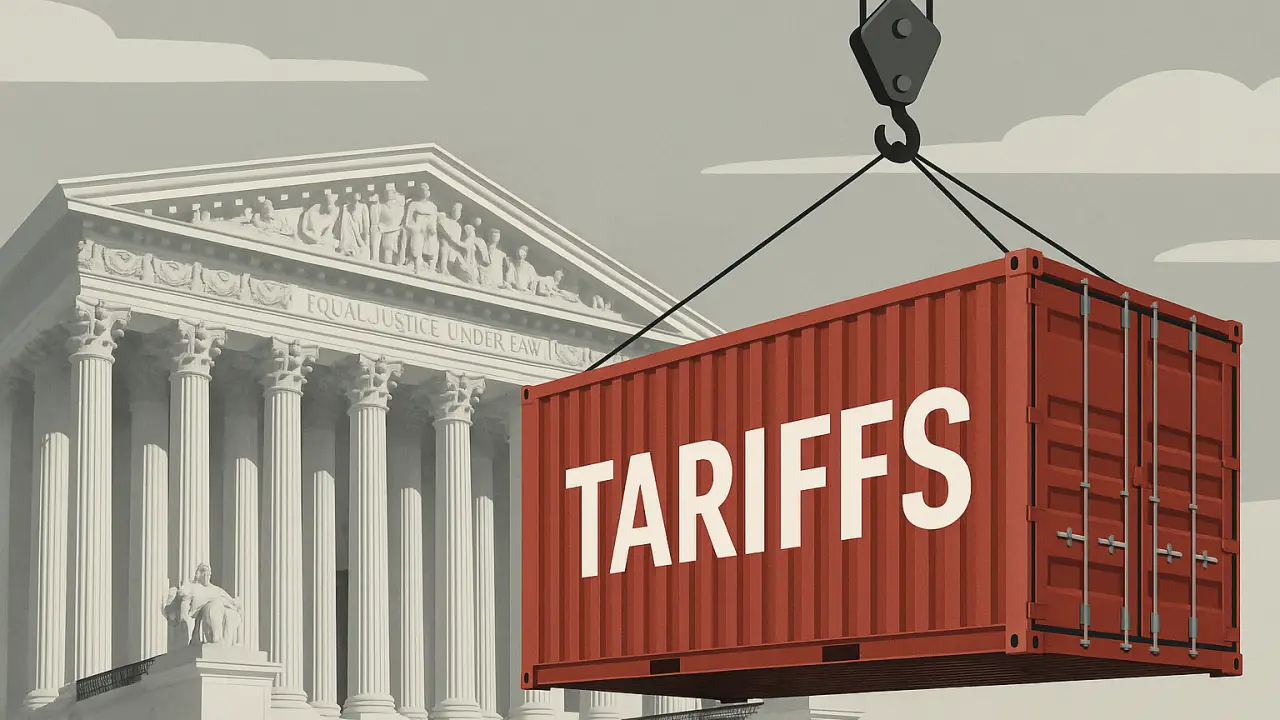


Last year, markets were massively impacted when US President Donald Trump imposed his “Liberation Day” tariffs. Now, markets have been waiting for the outcome of a suit before the US Supreme Court (SCOTUS) that could find those tariffs illegal. If that were the case, it could significantly shake up forex markets again. But, what the impact will be – or if there will be one at all – will depend on what the Court rules. Here are some indications of what’s likely to happen.
It appears that the SCOTUS decision on tariffs may come on Friday. The Supreme Court doesn’t officially publish a schedule of its expected rulings. Still, Court observers have become pretty confident that the decision on tariffs will be published at or a little after 10:00 EST on Friday. With markets still open at the time, it could induce significant volatility, depending on what’s in the ruling.
The point of contention is that the tariffs were imposed under the International Emergency Economic Powers Act (IEEPA), with the Trump Administration relying on a declaration of emergency to enact policy. The suit before the Court argues that using the IEEPA to implement policy is beyond the scope of that particular law. If the Justices rule in favor of the plaintiffs, it would mean the tariffs were illegal and that the US government would have to refund all taxes collected since their imposition.
However, the White House has had plenty of warning that the IEEPA-based tariffs might be ruled illegal, and has been working on contingency plans. Rather than use a single statute to cover the “reciprocal” tariffs, the Administration can rely on a series of other laws that would allow for virtually identical tariff levels. This would add bureaucracy to the way tariffs are implemented, but the practical effect would be similar and likely mean that almost all the trade deals would remain in effect. On the other hand, implementing some of the alternatives would take time, which could add uncertainty and cause markets to retreat for a while.
Last December, the White House made its case before the Supreme Court, and the line of questioning by the Justices left many observers with the impression that the Court would likely rule against Trump. Particularly, a line of questioning by Trump-appointed Justice Neil Gorisch was noted, suggesting that conservative judges were likely to vote against the tariffs. The consensus among analysts is that SCOTUS will rule against tariffs on Friday
The Court is not required to simply affirm (the technical term used to agree with the plaintiffs that the tariffs are illegal), or dismiss (rule that the tariffs are legal). The Court could opt to find some middle ground that would curtail Presidential power under the IEEPA, but not outright rule that tariffs are illegal, to prevent a disruption in the trade situation. These compromise measures carry a higher risk of impacting the market, since they are hard to predict and could add uncertainty, as the White House’s subsequent steps are in doubt.
The stock market is likely the most vulnerable to uncertainty, while gold is more closely connected to geopolitical implications. The ruling could at least temporarily reduce some of the higher-end tariffs, such as those on India and China, and support markets. The dollar has already been declining since the start of the year, and additional uncertainty could weigh on the greenback.
Given how strong the consensus is that the Supreme Court will rule against Trump, that outcome could leave markets unaffected, particularly if the White House immediately announces its countermeasures. Since the alternative means tariffs would remain in place, markets would more likely than not have an adverse reaction to a surprise ruling, supporting safe haven assets.
The stock market is the most vulnerable, as uncertainty around tariffs and court rulings can trigger risk-off sentiment.
Gold acts as a safe-haven asset and tends to rise during geopolitical tension or surprise market outcomes.
The dollar has been weakening since the start of the year, and added uncertainty could put further pressure on it.
Markets may show limited reaction because this outcome is largely priced in, especially if countermeasures are announced quickly.
A surprise ruling would likely trigger risk-off moves, supporting safe-haven assets like gold and hurting stocks.
By- Shahzad Ahmad May 16, 2026 at 3:53 PM (GST) Key Highlights Federal pros...
By- Shahzad Ahmad (Market Analyst | Investor | Trader | Strategist) May 23, 2026 at 1...
SpaceX said a portion of shares in its blockbuster public offering will be sold directly throu...
Market sentiment remained fragile across global financial markets as investors continued to monit...
Global markets ended the week on a stronger footing as easing geopolitical tensions between the US and Iran supported...
Global markets traded cautiously on Thursday as renewed Middle East tensions, rising oil prices, and persistent infla...
Global markets extended their rally as easing geopolitical tensions in the Middle East, falling oil prices, and conti...