Dazed delegates to IMF spring meetings wait in suspense
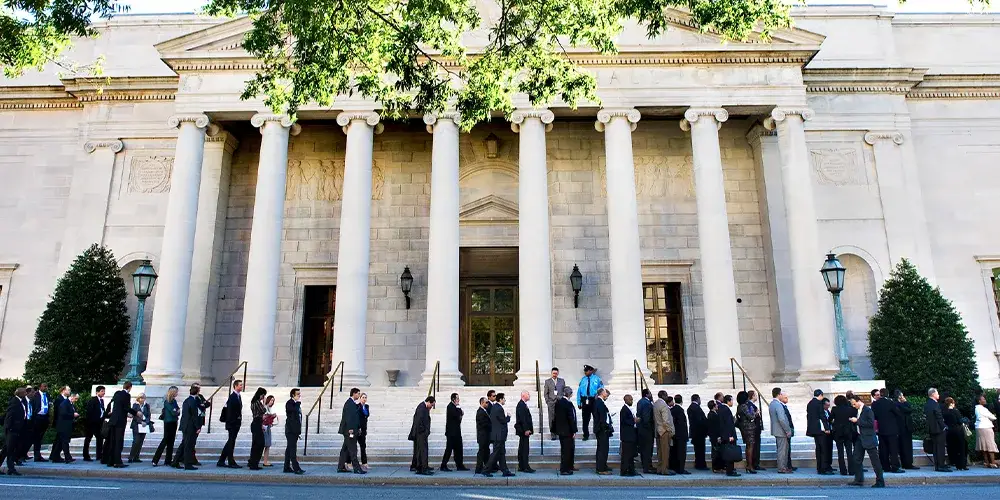


A topsy-turvy global outlook and a White House looking to save face
Finance ministers and central bank governors will soon descend on Washington DC for the International Monetary Fund-World Bank spring meetings, seeking to navigate their way through the shoals of a topsy-turvy global outlook.
The Iran war’s purported ‘ceasefire’ provides a respite, but all will be in suspense on what happens next – even US Treasury Secretary Scott Bessent. That answer may depend on the mood swings of one person searching for an off-ramp but needing to save face amid massive confusion over even the basic outlines for ceasefire negotiations.
All recognise that long-term disruption of the Strait of Hormuz could prove disastrous for the world economy. But even if the tense ‘ceasefire’ holds, the Strait may not revert to previous tanker flow levels, Iran and Israel could remain truculent and much production in Iran’s Middle Eastern neighbours may be shut in. The days of $60 per barrel of oil are gone for now, but where energy prices and knock-on effects settle remains to be seen.
Pity the poor IMF staff, working to finalise the World Economic Outlook and Global Financial Stability Report. Baseline global growth will most likely be downgraded but remain around 3%. Stagflation is a heightened risk for many quarters of the globe. Given rampant uncertainties and ‘non-linearities’, staff may need to cloak guesswork in scenarios.
Policy recipes may be little more than homilies. Energy importers will experience a negative terms-of-trade shock and energy exporters a positive one. While monetary policy should in principle look through supply shocks and the first-order jump in inflation, vigilance will be required against higher prices feeding into second-round effects while being mindful of the growth hit. Fiscal space, hamstrung by the sharp rise in debt and deficits in past years, should be used judiciously where it exists to protect social safety nets.
The IMF and the bigger picture
Exacerbating this dire situation, death knells of the ‘rules-based’ order occur daily, given a White House intent on diminishing America’s credibility and reputation and turning the US into a rogue ex-hegemon. Nato is under attack from its leading power. The world is fragmenting into blocs. The latest World Trade Organization Ministerial Conference was a flop after years of waning support for multilateral trade liberalisation and a shift to plurilateral deals. The fight for a cleaner environment is flagging.
Nonetheless, the IMF holds a cherished position. A vaunted pillar of the post-second world war order, its mission still commands broad universal support. All countries back the principles of strong macroeconomic policies and helping members facing balance-of-payments strains. They appreciate IMF surveillance, even if the Fund has no monopoly on economic wisdom. And they want a global first responder ready, especially when systemic shocks clobber the world economy.
In the past, when shocks erupted, the Fund created new facilities and pumped out liquidity. How to respond to the current shock will weigh on the agenda at the spring meetings. Given uncertainties, the Fund should not jump the gun. It can always augment programmes and offer support via emergency financing facilities, including the food shock window. Continued adjustment will still be needed.
More generally, the IMF is keeping its head down, not wishing to poke the unpredictable White House bear. Thus, one seldom hears about ‘climate change’ in Fund pronouncements. Its most-recent US Article IV report should have chastised the US much harder for its wrongheaded fiscal and trade policies. In contrast, the China Article IV report had more teeth, highlighting China’s failing growth model and the renminbi’s enormous undervaluation.
That relates to this year’s focus on global imbalances for the G7, G20 and IMF. French President Emmanuel Macron, current G7 chair, wants concrete commitments to reduce them. The US, as G20 president, is also paying attention, mainly to highlight China’s massive surpluses. The IMF dedicated major resources to studying them, but despite a fresh angle or two did not have much new to say – old wine, new bottles.
America is locked into reckless fiscal dissaving. China is unwilling to reorientate its growth model to support consumption and services, still relying on investment and net exports to compensate for weak domestic demand. European nations are not making sufficient headway on boosting growth and competitiveness and a Hamiltonian moment is hardly close at hand. Concrete commitments to slashing global imbalances are all talk and no cattle, to use a Texas idiom.
Institutional issues
On top of how the Fund increases financing pursuant to the Iran war fallout, it faces more prosaic institutional challenges.
The US, after the Fund struck a quota deal favourable for America that keeps China’s share unchanged and well below its global weight, now cannot secure passage of requisite legislation. Worse, an obstacle is a penny-wise pound-foolish squabble over budget requirements and misguided Congressional Budget Office scoring.
Last year, the Fund decided to allocate a portion of future surplus income for subsidising the cost of borrowing for poor countries – a welcome innovative decision, especially as low-income country lending constitutes a major IMF activity. While time remains to seal the deal, several European countries are blocking it.
On debt, one will hear the Fund’s usual word salad – including Common Framework, Global Sovereign Debt Roundtable, debt sustainability analysis, transparency and the ‘three pillar approach’. But debt distress remains rampant and low- and middle-income countries often don’t face liquidity pressures, but insolvency. That cries out for deep or deeper debt relief, a point insufficiently addressed in the Fund’s work.
Undoubtedly, there will be useful bilateral discussions about some of the Fund’s key programme countries – including Ukraine, Argentina, Pakistan and Egypt.
This year’s spring meetings will occur amid a fluid and difficult global economic backdrop. Ministers and governors will be in suspense as to what happens next.
By- Shahzad Ahmad May 16, 2026 at 3:53 PM (GST) Key Highlights Federal pros...
By- Shahzad Ahmad (Market Analyst | Investor | Trader | Strategist) May 23, 2026 at 1...
SpaceX said a portion of shares in its blockbuster public offering will be sold directly throu...
Market sentiment remained fragile across global financial markets as investors continued to monit...
Global markets ended the week on a stronger footing as easing geopolitical tensions between the US and Iran supported...
Global markets traded cautiously on Thursday as renewed Middle East tensions, rising oil prices, and persistent infla...
Global markets extended their rally as easing geopolitical tensions in the Middle East, falling oil prices, and conti...