BYD Introduces Next-Generation Blade Battery to Revive EV Sales
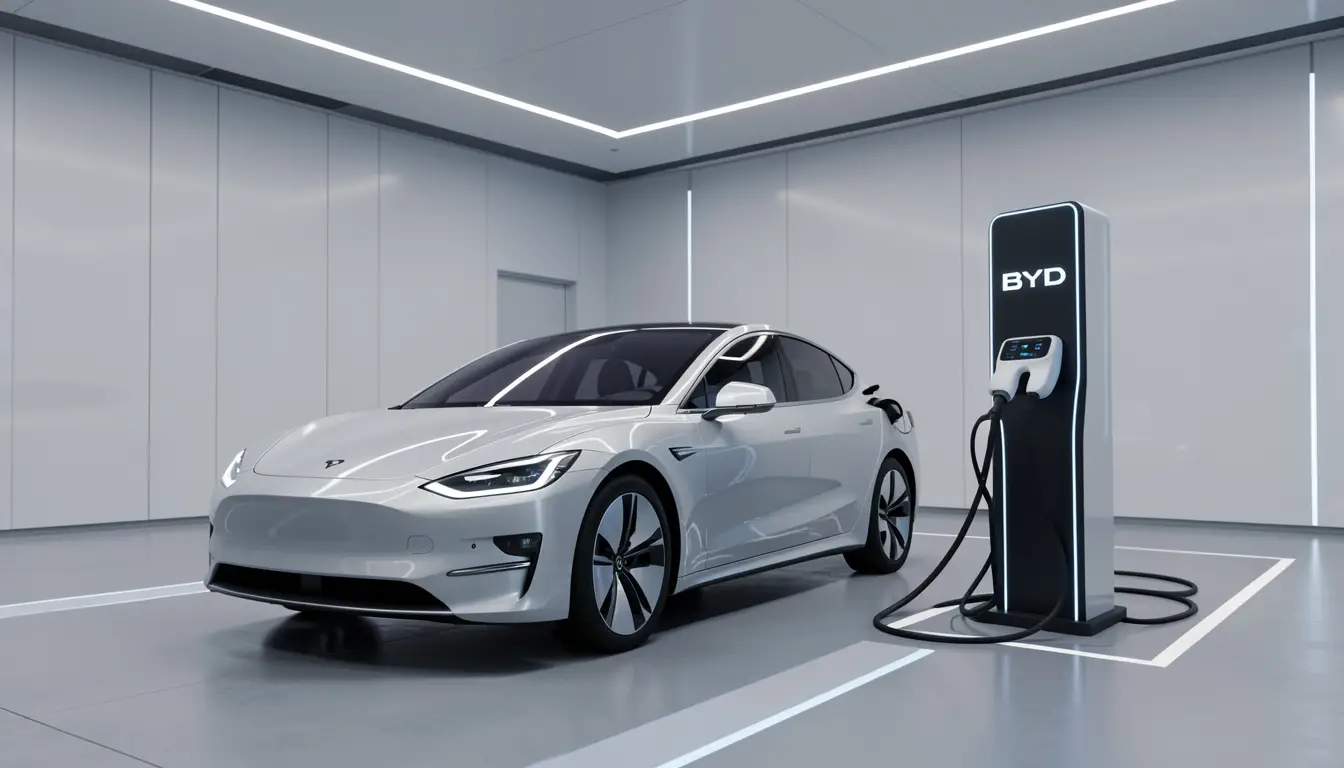


BYD unveiled a major upgrade to its battery technology on Thursday, marking the first significant improvement to its Blade Battery in six years. The move comes as the Chinese electric vehicle maker looks to regain momentum in a highly competitive domestic market following a sharp slowdown in sales.
The second-generation Blade Battery can charge from 20% to 97% in less than 12 minutes, even in extreme cold conditions of minus 20°C. According to BYD Chairman Wang Chuanfu, the battery can provide a driving range of up to 777 kilometers on a single charge.
The upgraded batteries also offer greater energy density, allowing BYD’s premium models — including the Denza Z9GT and the Yangwang U7 — to potentially exceed a driving range of 1,000 kilometers. The company stated that the batteries have passed safety tests that surpass China’s latest national standards.
BYD is also expanding its “Flash Charging” infrastructure, aiming to deploy 20,000 charging stations by the end of 2026, including about 2,000 located along highways. As of March 5, the company had already built more than 4,000 stations.
During a three-hour live-streamed launch event, BYD introduced more than 10 vehicle models equipped with the new Blade Battery across its brands. Prices range from about 155,000 yuan ($22,463) for the Song Ultra EV to roughly 1.3 million yuan for the flagship Yangwang U8L.
Despite the technological improvements, analysts remain cautious about the company’s ability to quickly recover market share. Eugene Hsiao, an analyst at Macquarie, said weak demand in China’s EV market may continue to weigh on sales.
Shares of BYD listed in Hong Kong rose about 1.2% in morning trading on Friday, while the company’s Shenzhen-listed shares slipped slightly.
The battery launch coincides with efforts by Government of China to encourage automakers to move away from aggressive price wars and instead focus on higher-quality, differentiated vehicles.
China is also pushing for a rapid expansion of EV charging infrastructure, with a goal to double the number of charging stations within three years.
To avoid repeating last year’s price-driven market downturn, BYD has introduced longer-range plug-in hybrid models and joined Tesla in offering low-interest financing plans lasting up to seven years.
Despite several innovation efforts in early 2025, BYD has struggled to reverse a decline in domestic sales that began in the second half of that year. Vehicle deliveries dropped further in January and February, allowing rival Geely to overtake BYD in sales.
The end of China’s purchase tax exemption for electric and plug-in hybrid vehicles also helped traditional automakers regain ground. Volkswagen, for example, reclaimed the position of China’s top-selling brand in January.
Last year, BYD attempted to drive innovation by introducing advanced assisted-driving features in budget vehicles priced under $10,000. The company also launched a five-minute super-charging system and introduced two electric models — the Han L sedan and Tang L SUV.
However, combined sales of those models reached only about 49,000 units by January, a small share of BYD’s total sales of 3.76 million vehicles during the same period.
The company launched the second-generation Blade Battery with faster charging and longer driving range.
It can charge from 20% to 97% in under 12 minutes.
Up to 777 km, with some premium models potentially exceeding 1,000 km.
The company is trying to recover market momentum after declining domestic EV sales.
Rivals such as Geely and traditional automakers like Volkswagen.
Alphabet-backed Isomorphic Labs, the AI-powered drug-discovery company spun out of Google DeepMin...
Stock futures moved slightly higher early Tuesday after the Nasdaq Composite reached a new record...
U.S. stocks ended mixed on Thursday as fresh concerns surrounding OpenAI’s revenue performa...
The S&P 500 finished marginally lower on Monday as investors prepared for a busy week of corp...

Technology stock weakness and surging energy prices put investors on alert, raising fears of renewed inflation, highe...

Willow chip cuts quantum computing errors by 40 times, advancing research that could eventually reshape the cybersecu...

Markets lean toward a pause as the Federal Reserve weighs persistent inflation against economic resilience and the ne...