Asia–Europe Flight Prices Surge as Middle East Hubs Close
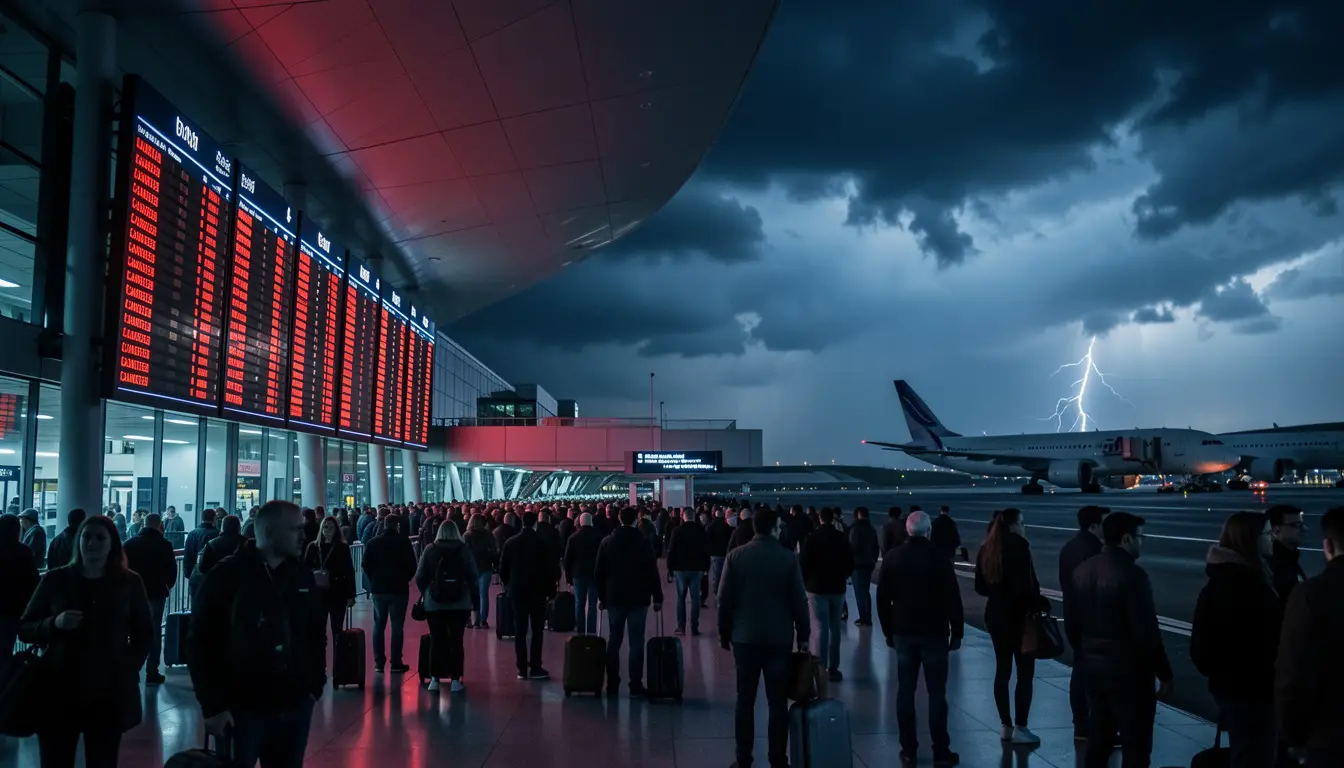


Flight prices between Asia and Europe have spiked sharply following the closure of major Middle Eastern aviation hubs amid the U.S.–Israel conflict with Iran. Airline websites show many key routes fully booked for days.
Major Gulf transit centers — including Dubai, the world’s busiest international airport — have been closed for four days, removing significant capacity from routes such as Australia–Europe, where carriers like Emirates and Qatar Airways traditionally dominate.
Australia’s Flight Centre Travel Group reported a 75% surge in customer calls since the crisis began, with teams working continuously to rebook passengers through alternative hubs in China, Singapore, and the United States.
Travelers Charlotte and Richard Kennard were among those affected. Scheduled to fly from Birmingham to Sydney via Dubai on Emirates, they arrived at the airport to find their flight cancelled. They later secured one-way tickets on Singapore Airlines from London for £1,900 each — substantially higher than their original return fare.
Non-stop Asia–Europe carriers are rerouting flights north via the Caucasus and Afghanistan or south through Egypt, Saudi Arabia, and Oman. These detours increase flight times and fuel consumption, compounding costs amid rising oil prices.
Subhas Menon, head of the Association of Asia Pacific Airlines, warned that extended disruption could undermine airline profitability and reduce global connectivity.
Airlines operating outside the affected region — including Cathay Pacific, Singapore Airlines, and Turkish Airlines — may benefit temporarily as passengers shift away from Gulf carriers.
Airline websites show limited near-term availability and elevated fares. Economy seats on Hong Kong–London routes are largely unavailable until mid-March, with one-way fares exceeding $2,700 before easing later in the month. Similar patterns appear on routes from Sydney, Bangkok, Beijing, and other major hubs.
Thai Airways reports Europe-bound flights fully booked, while Taiwan’s EVA Airways notes surging demand. Mainland Chinese carriers also show sharply higher fares, with economy seats scarce on near-term departures.
The disruption highlights how geopolitical conflict can rapidly strain global aviation networks — with higher prices and reduced connectivity the immediate cost.
Because major Middle Eastern hubs closed due to the U.S.–Israel conflict with Iran, sharply reducing capacity.
Major Gulf hubs, including Dubai International Airport, one of the world’s busiest international transit centers.
By rerouting north via the Caucasus or south through Egypt and Saudi Arabia, increasing time and fuel costs.
Economy seats are largely sold out on near-term departures, with significantly higher fares.
Airlines outside the Gulf region such as Cathay Pacific, Singapore Airlines, and Turkish Airlines may see short-term gains.
Alphabet-backed Isomorphic Labs, the AI-powered drug-discovery company spun out of Google DeepMin...
U.S. stocks finished higher Friday after a surprisingly weak September jobs report increased expe...
In this episode, we break down the latest technical picture across Gold (XAUUSD), Bitcoin (BTCUSD...
Stock futures moved slightly higher early Tuesday after the Nasdaq Composite reached a new record...

Willow chip cuts quantum computing errors by 40 times, advancing research that could eventually reshape the cybersecu...

Markets lean toward a pause as the Federal Reserve weighs persistent inflation against economic resilience and the ne...

U.S. stocks closed lower on Wednesday as hotter-than-expected September inflation data weighed on investor sentiment,...