The Dual Chokepoint Crisis: Global Energy Markets Under Pressure
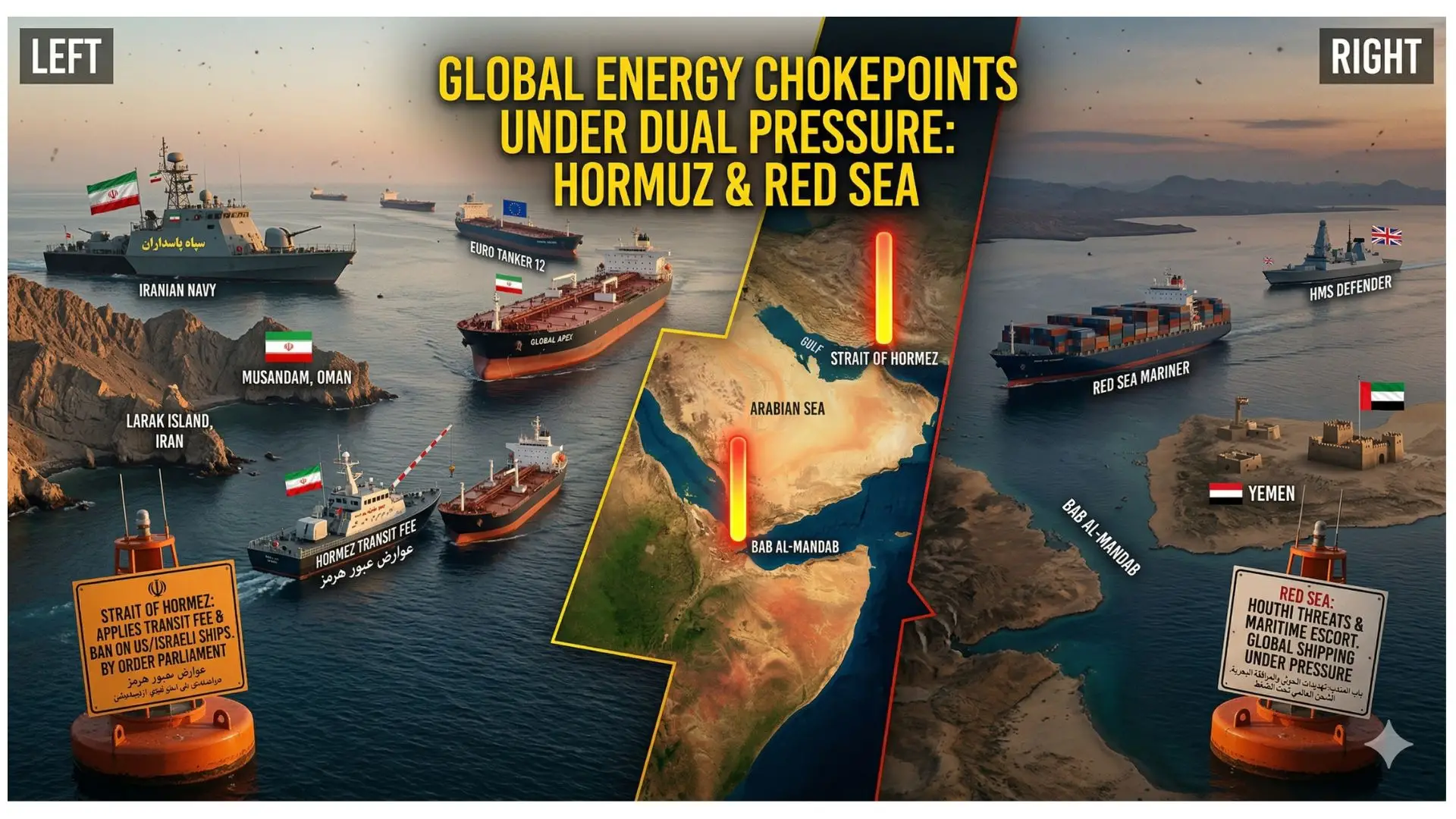


In a move that has sent ripples through the energy sector, the Iranian parliament has officially approved a bill to levy transit fees on vessels passing through the Strait of Hormuz. More critically, the legislation includes a formal ban on all US and Israeli-flagged ships from entering these waters.
As the transit point for roughly 20% of the world’s daily oil consumption, any friction in the Strait of Hormuz is a "code red" for global markets. The introduction of transit fees—traditionally a right reserved for territorial waters rather than international straits—challenges long-standing maritime conventions and adds a "geopolitical tax" to every barrel of oil leaving the Gulf.
Simultaneously, the situation in the Red Sea remains volatile. Continued Houthi activity has forced major shipping lines to maintain lengthy and expensive diversions around the Cape of Good Hope. This "pincer effect" on both sides of the Arabian Peninsula is creating a massive bottleneck for global trade.
For traders and logistics providers, the implications are clear:
Increased Tonnage Costs: Longer routes mean higher fuel consumption and rising charter rates.
Insurance Premiums: War-risk premiums for Gulf and Red Sea transits are spiking, adding to the bottom-line cost of commodities.
Inventory Delays: The "Just-in-Time" supply chain model is failing under the weight of these multi-week transit delays.
With Brent crude already testing the $112–$116 range, the market is pricing in the "worst-case" scenario: a total collapse of the April 6 talks followed by a physical blockade. If Iran follows through on its ban of US/Israeli vessels, we can expect a rapid move toward $120+ per barrel, accompanied by a flight to safe-haven assets like the US Dollar and Gold.
The April 6 Deadline: This is the ultimate "binary event." Success brings a massive relief rally; failure triggers a supply-side shock.
OPEC+ Flexibility: Watch for signals from the April 5 ministerial meeting on whether they will pause their planned production increases to stabilize the market.
Shipping Stocks: Logistics and tanker companies may see increased volatility as freight rates decouple from traditional seasonal trends.
The Bottom Line: We are no longer just looking at a regional conflict; we are looking at a fundamental shift in how global energy and trade are protected and taxed.
#Trading #Geopolitics #OilAndGas #Shipping #StraitOfHormuz #RedSea #GlobalTrade #MarketAnalysis
The latest crypto ETF flow data delivered a notable shift in investor demand: Zcash (ZEC) spot ET...
Google has disclosed that its Gemini AI model accessed and hacked three real companies during a c...
The U.S. bond market is flashing a major warning signal. The benchmark 10-year Treasury yield cli...
U.S. markets turned lower Wednesday after the Federal Reserve delivered its first interest-rate i...

Bitcoin's latest rally has attracted a major wave of institutional money. U.S. spot Bitcoin ETFs recorded $998.95...

Alibaba is accelerating its global AI expansion, announcing plans to build new cloud regions across Europe and the Mi...

The latest crypto ETF flow data delivered a notable shift in investor demand: Zcash (ZEC) spot ETFs attracted $98.2 m...