Iran Rejects Temporary Ceasefire as Strait of Hormuz Crisis Deepens



Iran has rejected a U.S.-backed proposal for a 45-day ceasefire tied to reopening the Strait of Hormuz, instead demanding a permanent end to the conflict along with sanctions relief and compensation for war damages, according to reports from The Wall Street Journal.
Tehran’s counterproposal goes beyond a temporary pause, calling for long-term guarantees, regional de-escalation, and assurances that Israel would not target allied groups such as Hezbollah. Iranian mediators warned that a short-term ceasefire could be used strategically by the U.S. to prepare for further military action.
U.S. President Donald Trump responded by calling Iran’s proposal “not good enough,” while issuing strong warnings about potential escalation if no agreement is reached. He emphasized that failure to comply could result in severe damage to Iran’s infrastructure.
Meanwhile, the conflict continues to intensify. Israeli strikes have targeted key Iranian petrochemical facilities, including major production hubs responsible for a large portion of the country’s exports. Iran has retaliated with missile launches across the region, with several Gulf nations intercepting incoming threats.
The Strait of Hormuz remains at the center of global concern. As a critical oil transit route, its disruption continues to drive volatility in energy markets, with prices remaining elevated despite brief pullbacks. Diplomatic efforts led by regional mediators are ongoing, but the gap between temporary de-escalation and permanent resolution remains significant.
Because it seeks a permanent end to the conflict, along with sanctions relief, compensation, and long-term guarantees rather than a temporary pause.
They warned that the U.S. could use the ceasefire period to prepare for additional military action.
He described it as insufficient while issuing strong warnings about potential escalation and consequences.
It is a critical global oil transit route, handling roughly one-fifth of the world’s oil supply, making its stability vital for energy markets.
It has increased volatility, especially in oil prices, as investors fear prolonged disruption in supply routes.
Bitcoin's latest rally has attracted a major wave of institutional money. U.S. spot Bitcoin E...
Alibaba is accelerating its global AI expansion, announcing plans to build new cloud regions acro...
U.S. stocks finished higher Friday after a surprisingly weak September jobs report increased expe...
In this episode, we break down the latest technical picture across Gold (XAUUSD), Bitcoin (BTCUSD...

In this episode, we break down the latest technical picture across Gold (XAUUSD), Bitcoin (BTCUSD), EURUSD, NASDAQ (U...
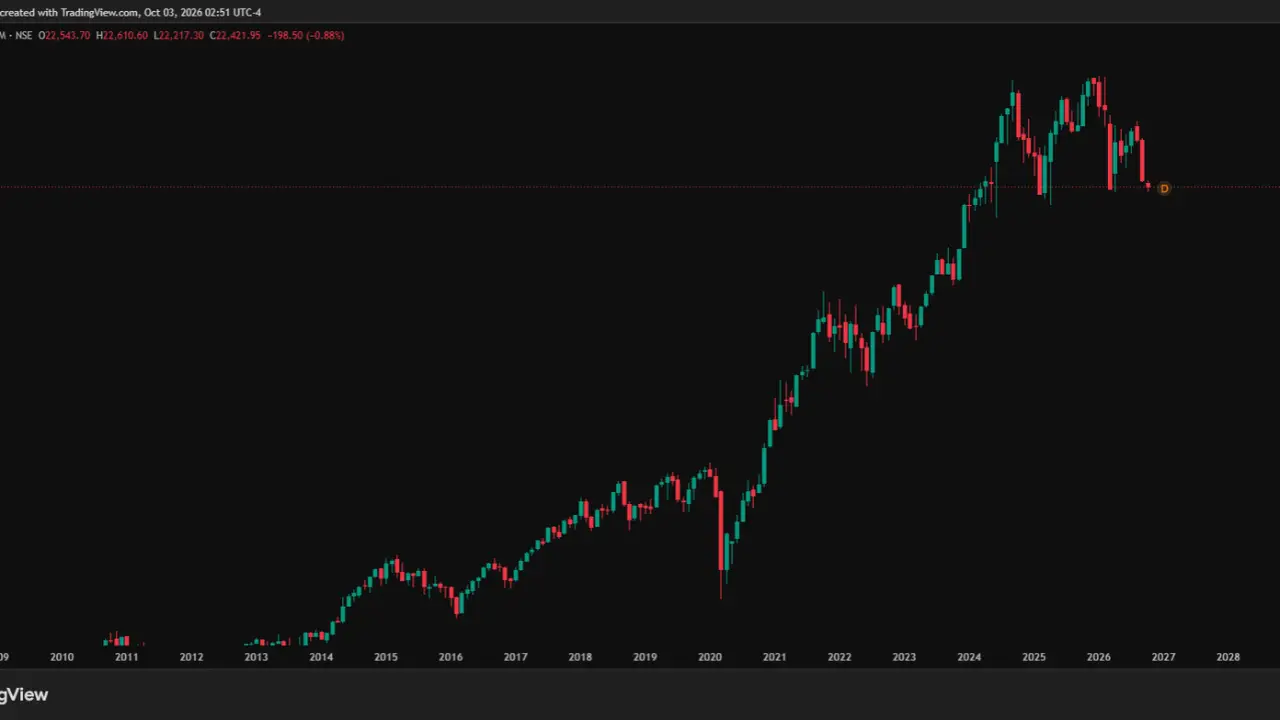
The Nifty 50 is currently around 22,780, down roughly 13% from its January all-time high of 26,373. After the stro...

U.S. stocks finished higher Friday after a surprisingly weak September jobs report increased expectations that the Fe...