Gold Slips in Early Trade as Stronger Dollar and Rate Concerns Weigh



Gold prices declined in early trading, pressured by a stronger U.S. dollar and growing concerns over inflation and interest rates. A firmer dollar typically makes gold more expensive for investors holding other currencies, dampening demand for the precious metal.
Spot gold fell 1.3% to $4,617.52 per ounce, according to ICE data. Meanwhile, the U.S. Dollar Index edged 0.2% higher to 100.263, reflecting increased demand for the greenback.
Rising oil prices have also fueled worries about accelerating inflation, which could prompt major central banks to adopt tighter monetary policies. Higher interest rates tend to reduce the appeal of gold, as it does not offer any yield compared to interest-bearing assets.
As a result, a combination of currency strength and expectations of policy tightening is weighing on gold prices, offsetting its traditional role as a hedge against inflation.
Gold prices dropped mainly due to a stronger U.S. dollar, which makes gold more expensive for foreign investors, reducing demand.
Gold and the dollar usually move in opposite directions. When the dollar strengthens, gold becomes costlier in other currencies, leading to lower demand.
Although gold is often seen as an inflation hedge, rising inflation can lead to higher interest rates, which reduce gold’s attractiveness since it doesn’t earn interest.
Central banks influence gold through monetary policy. If they raise interest rates to combat inflation, gold prices often decline.
An increase in the U.S. Dollar Index signals a stronger dollar, which typically puts downward pressure on gold prices.
Bitcoin's latest rally has attracted a major wave of institutional money. U.S. spot Bitcoin E...
Alibaba is accelerating its global AI expansion, announcing plans to build new cloud regions acro...
U.S. stocks finished higher Friday after a surprisingly weak September jobs report increased expe...
The Nifty 50 is currently around 22,780, down roughly 13% from its January all-time high of 26,37...

In this episode, we break down the latest technical picture across Gold (XAUUSD), Bitcoin (BTCUSD), EURUSD, NASDAQ (U...
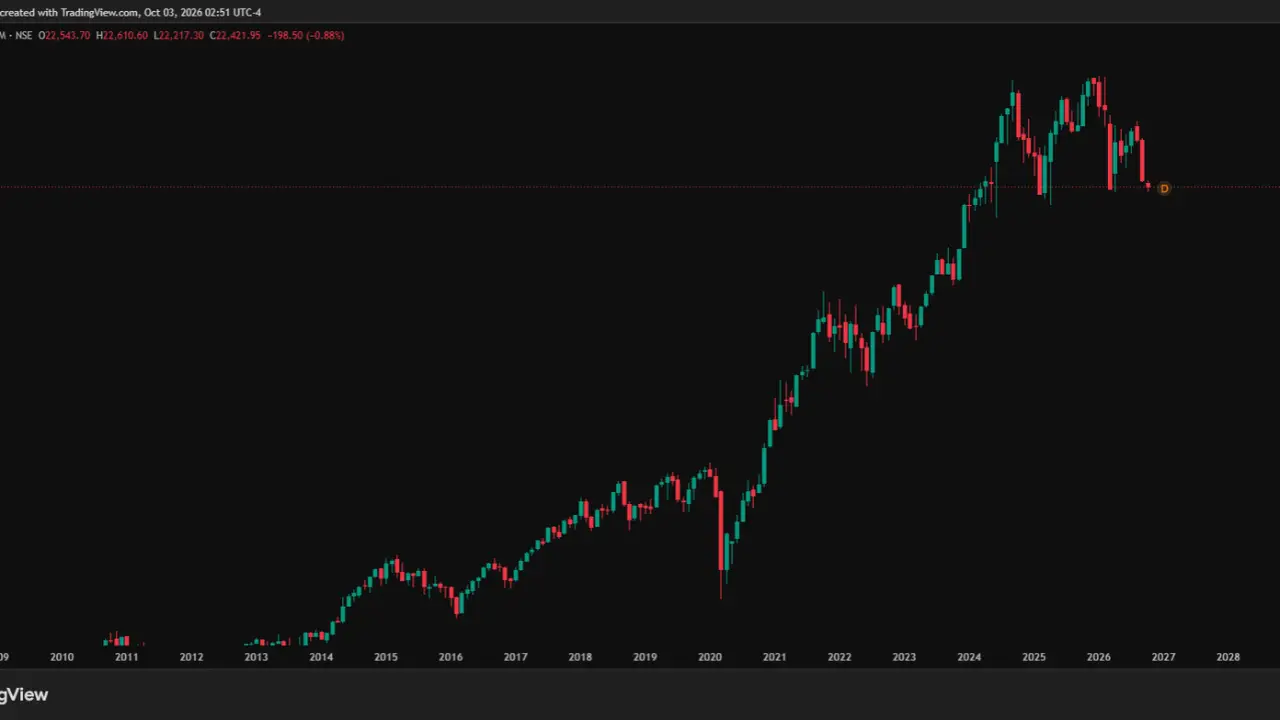
The Nifty 50 is currently around 22,780, down roughly 13% from its January all-time high of 26,373. After the stro...

U.S. stocks finished higher Friday after a surprisingly weak September jobs report increased expectations that the Fe...